

Cosmetics: the more accessible luxury proving resilient amid the crisis

By
AFP
Published
September 30, 2026
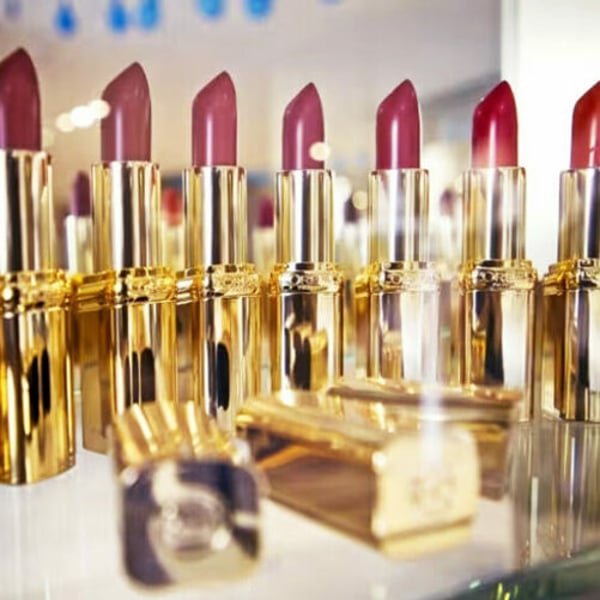
A Louis Vuitton lipstick or a Lancôme cream: as the luxury industry looks to rekindle growth, high-end cosmetics continue to gather pace, fuelled by consumers who favour these more accessible purchases over fashion items.

At Galeries Lafayette in Paris on Monday afternoon, the ground floor is heaving with customers. At the Louis Vuitton make-up counter, Jessica Karawa, 32, is trying out fragrances. “I really like perfume; I even bought one yesterday at Creed,” she tells AFP.
She also treats herself to luxury items from time to time, such as the monogrammed bag slung over her shoulder, but she admits that the price increases introduced by luxury brands in recent years have curbed her spending. “I bought this bag for €1,000 five years ago; now the same item sells for €1,500,” she laments.
Despite an uncertain geopolitical climate and inflationary pressures, the high-end cosmetics sector recorded sales growth of 7% in North America, 5% in Europe, and 10% in Latin America in the first half of the year, according to the consultancy Circana.
“This is the fifth consecutive year of strong growth in the prestige cosmetics market worldwide,” says Mathilde Lion, a director at Circana and an expert in the field.
L’Oréal outperforms LVMH
Indulging without breaking the bank: “In this respect, make-up is particularly well placed,” she observes. In recent years, the major luxury groups have recognised the value of developing product ranges that allow customers to buy into their brands, as seen with Hermès, which launched its lipsticks in 2020, and Celine in 2024.
This strategy is all the more important given that, for at least the past two years, leather goods – long the mainstay of luxury – have been struggling. In the first half of the year, LVMH’s fashion and leather goods division (Dior, Celine, etc.) saw a 5% decline, as did Kering’s (Gucci, Balenciaga, etc.).
Several factors account for this slowdown, including price rises implemented by the major luxury houses. According to the consultancy firm Bain & Company, the luxury market lost 20 million customers between 2024 and 2025, having already lost 50 million in previous years.
As a sign of the growing importance of beauty, the sector’s global leader, L’Oréal – which offers several ranges, from mass-market to luxury (such as Lancôme), as well as professional products – recently dethroned the luxury giant LVMH at the top of the CAC 40.
A powerful symbol, according to industry expert Eric Briones, who even speaks of a new era. “In 2026, the centre of gravity in the luxury sector shifted from fashion to the broader beauty sector,” he says.
€10,000 a litre
The expert also highlights the habits of Gen Z – the generation born between the mid-1990s and the mid-2010s – who are “all about self-optimisation. And that involves the body and beauty.”
Farewell to crocodile-skin bags and haute couture dresses? For Benoît Heilbrunn, a professor of marketing at ESCP Business School, young people today “want the signals of luxury, but not necessarily luxury items.”
With cosmetics, brands “trade on the idea that it might be a luxury item, when in fact nothing in the substance or the materials justifies it being considered a luxury item,” he asserts.
And prices can sometimes reach astronomical heights. A serum from the Swiss brand La Prairie, for example, sells for €300 for 30 ml… or €10,000 per litre, whilst 500 ml of Crème de la Mer (Estée Lauder) sell for €2,970.
“The hyperinflation of luxury is spilling over into the beauty sector,” observes Eric Briones, with consumers who, in the long run, may well turn away from products deemed too expensive in favour of less ostentatious brands. Or even turn to ‘dupes’ – those highly popular, much cheaper cosmetics inspired by the big brands.
Copyright © 2026 AFP. All rights reserved. All information displayed in this section (dispatches, photographs, logos) are protected by intellectual property rights owned by Agence France-Presse. As a consequence you may not copy, reproduce, modify, transmit, publish, display or in any way commercially exploit any of the contents of this section without the prior written consent of Agence France-Presses.